The Soda: the Ultimate in Costa Rican Food
One of the most common mistakes we see from first-time visitors to Costa Rica is how they approach dining out. This is because Costa Rica kind of breaks the mold when it comes to restaurants and fine dining. Many travelers, regardless of the country they are visiting, are looking for lavish or luxurious dining experiences to make their trip memorable. This is often the wrong strategy for Costa Rica, depending on which part of the country you are visiting. In most areas, the key to the best and most authentic food is the “soda.”
Costa Rican Cuisine
Like many Central American countries, Costa Rica’s cuisine is centered around rice and beans. In the US, most dishes are oriented around meats, with carbs and vegetables enhancing or supplementing the meat. This is reversed in traditional Costa Rican dishes. A great example is “Casado.” Casado is a well-rounded meal consisting of rice, black beans, maduros, salad, and an optional meat source (typically chicken, beef, pork, or fish). There are regional and familial variations to Casado (you may find it with a tuna pasta salad, you may not get queso típico, or you may not have many meat options). However, it will ALWAYS come with rice and beans, with all the other options working in a supplemental capacity. This is how most of Costa Rica’s traditional dishes operate. Going into restaurants with this understanding will really help you experience Costa Rican cuisine in the best possible way.
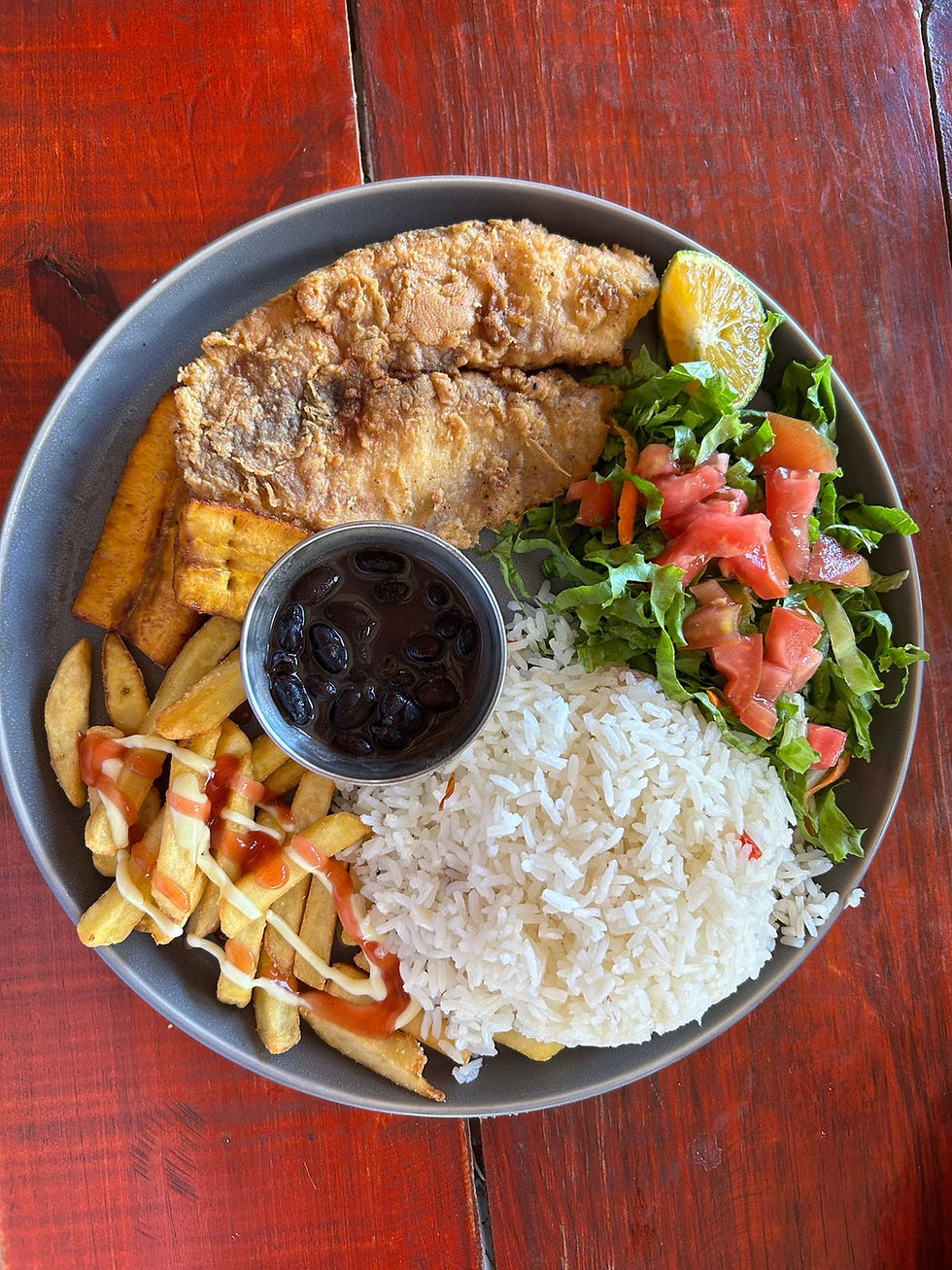
Costa Rican food (also called típico) is often misunderstood by travelers expecting heavy spice or intense heat similar to other Central American cuisines. Traditional Tico food is usually much milder and more focused on freshness, balance, and comfort. The emphasis is less about overwhelming flavor and more about simple ingredients done well. This simplicity is part of the appeal. A good Costa Rican meal is not trying to impress you with complexity. It is trying to feed you well, and almost everyone who lives on típico for a week or two says they feel much healthier and cleaner due to the quality of the ingredients and simple, unprocessed nature of the food.
The Restaurant Scene
The restaurant scene in Costa Rica is incredibly diverse. We frequently find Mexican, Indian, Thai, Italian, German, Turkish, Chinese, and Japanese restaurants, as well as restaurants specializing in cuisine from other Central and South American countries like El Salvador, Argentina, Colombia, etc. Most of these restaurants do an excellent job of creating dishes authentic to their respective cultures, surprisingly so in many cases. Costa Rica has also adopted some staples from US cuisine, leading to a strong prevalence of hamburger and pizza joints. This leaves many people asking, “where are all of the Costa Rican restaurants?” While there are many upscale Costa Rican restaurants, most Tico restaurants are in the classification of “soda.”
This can initially be confusing for travelers staying in tourist-heavy beach towns or resort areas. You may walk past trendy cafés, cocktail bars, sushi restaurants, and wood-fired pizza spots while wondering where the local food actually is. We recommend looking for the restaurants that locals are frequenting or that have lots of online reviews written in Spanish.
It is worth noting that many sodas have negatively skewed online ratings on apps like google maps. In many cases, restaurants with higher online ratings are more closely associated to familiarity with US-based expectations than the actual quality of the food or establishment. This is because it is very common for tourists to frequent sodas with incorrect expectations. After exploring numerous sodas and getting to know the staff at some of our favorites, we can attest that tourists frequently expect sodas to deliver almost Michelin-style experiences and often ask uninformed questions like “do you have any dishes without rice and beans?” For this reason, even the best sodas are often rated in the 3-4 star range, which causes many people to overlook them. In our experience, even sodas rated into the low 3-star range have been phenomenal, whereas many of the more upscale foreign restaurants can be more reliably assessed based on the standard 5-start scale.
The Soda
Sodas are smaller, often open-air restaurants that serve authentic home-style Tico food. The best way to think of them is as the equivalent of diners in the US. They serve delicious and authentic food at a very reasonable price. In the middle of the 20th century, sodas were literal soda fountains (fuentes de soda) that served soft drinks and ice cream. Over time, they evolved into their current function but retained the name “soda.”
Sodas are not flashy or luxurious; they are typically operated out of modest or rustic establishments. This can lead newer travelers to Costa Rica to make incorrect assumptions about the quality of the food or the cleanliness of the restaurant. DO NOT be discouraged. The vast majority of sodas are no different than your average restaurant in the US in terms of food safety and cleanliness, they may just lack the incredibly polished and modern aesthetic that is expected of a restaurant venue in the US. But make no mistake, despite the lack of luxury, they will undoubtedly create some of your best dining experiences and memories.
Another thing many travelers quickly discover is just how affordable sodas can be. Even in more tourist-oriented regions, a large traditional meal often costs dramatically less than what you would pay in the United States for comparable portions. You are not paying for ambiance, branding, or presentation. You are simply paying for real and good food.
What to Order
Some sodas will have menus in English or have English-speaking staff, but many don’t. This can also be intimidating for some travelers who don’t speak Spanish, so here are some essential dishes we recommend ordering that can be found at almost any soda.
Casado
As previously mentioned, Casado is a staple rice and bean dish. It is available in just about any Tico restaurant. “Casado” translates to “married.” The dish’s naming etymology is not well documented but is generally believed to refer either to a “marriage” of different foods or to the type of meal a married man would traditionally eat at home. No trip to Costa Rica is truly complete without experiencing Casado at a few different establishments.
Our recommendation: try it with fried fish (pescado empanizado) at least once if you are near the coast.

Gallo Pinto
If Casado is Costa Rica’s lunch and supper, Gallo Pinto is its breakfast.
Gallo Pinto consists of rice and beans cooked together with onions, peppers, cilantro, and spices, often served with eggs, natilla (a Costa Rican cultured cream similar to sour cream), a tortilla, queso típico (a Costa Rican soft white cheese that is either served fried or “natural”), and sausage (salchichon). This is another dish where every family and every soda has its own version. Some are heavier on cilantro. Some use black beans, while others use red beans, particularly in regions with Caribbean influence. Almost everyone has strong opinions about whose is best. While it sounds simple on paper, a good Gallo Pinto is incredibly satisfying and doesn’t sit like a heavy breakfast. This is a great option to start off a day of exploration and adventure.

Chifrijo
Chifrijo is one of the great bar foods of Costa Rica and one of the country’s most underrated dishes overall. It is typically served in a bowl layered with rice, beans, fried pork (chicharrón), pico de gallo, and avocado, often accompanied by tortilla chips. It is salty, crunchy, fresh, filling, and perfect alongside a cold beer after a long beach day or hike. Many visitors discover Chifrijo late in their trip and immediately wish they had tried it sooner.
Ceviche
Costa Rican ceviche is typically made with white fish (seabass, marlin, etc.) marinated in lime juice with onions, cilantro, and peppers. Compared to most types of ceviche, it is usually more citrus-heavy and less spicy. Along the coast, especially on the Pacific side, you will find some excellent versions made with extremely fresh fish. It is commonly served chilled with tortilla chips.
Arroz con Pollo
Arroz con Pollo (rice with chicken) is another classic dish found throughout Costa Rica. It is typically made with seasoned rice, shredded chicken, vegetables, and spices, often served with fries and salad. This is a very common dish at family gatherings, celebrations, and local events. It is filling, inexpensive, and reliably good everywhere you go. It is fondly referred to as “Arroz con Siempre”, meaning “Rice with Always” due to it’s prevalence at social gatherings.
Fine Dining
There are plenty of fine dining options throughout Costa Rica, both for Tico cuisine as well as foreign cuisines. We also encourage you to try these options, as diversity is a fundamental part of Costa Rica. The upscale Tico restaurants often present very interesting fusion dishes that combine traditional Costa Rican ingredients with international techniques and presentation styles. That said, we think many travelers accidentally over-prioritize these experiences.
The truth is that some of the most memorable meals in Costa Rica happen at sodas. They might have shaky tables, mismatched or even plastic chairs, and probably laminated menus that have seen an obvious amount of use. You may not remember the fancy cocktail garnish at a luxury resort six months later, but you will probably remember the family-owned soda where you got served an incredibly satisfying meal that opened your eyes to how good rice and beans can be.
Simplicity is Beautiful
Costa Rica is not a country that hides its culture behind exclusivity. Some of its best experiences are remarkably accessible if you are willing to embrace simplicity. If you have the right expectations and mindset and know what to look for, you will have a great culinary adventure no matter what part of the country you visit. Just don’t make the mistake of overlooking the humble soda.


Comments